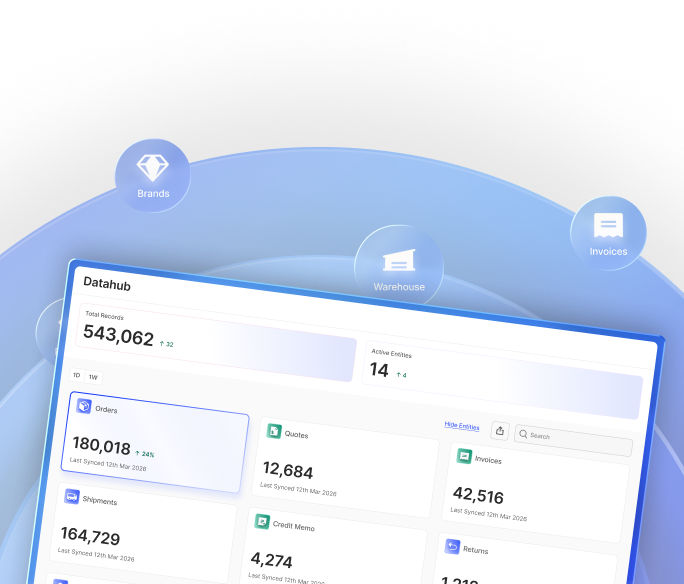
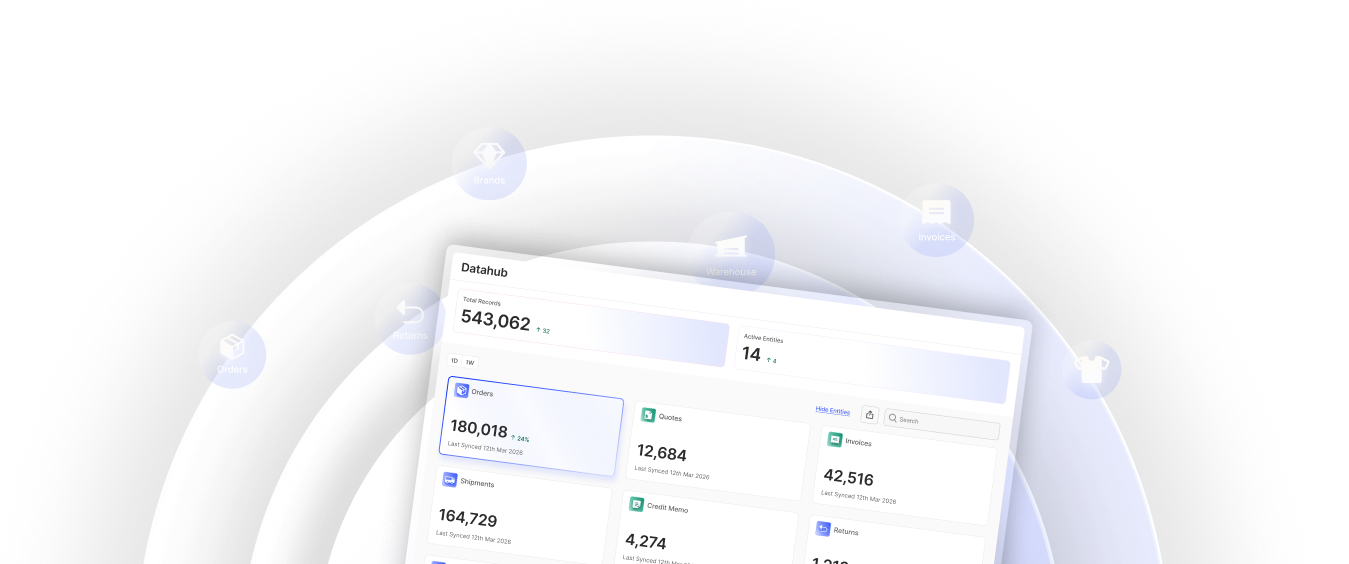
One governed foundation.
Every operation runs on top of it.
OmnifiCX is the Commerce Operating System, and the difference shows up the moment data reaches it. Most platforms move information between systems. OmnifiCX governs it: validated, standardized, and mastered into a single canonical record before anything downstream ever touches it.
This page is the architecture underneath that governance. This layer makes order management work correctly today and supports every operation you activate after it.

The problem with moving data
Connecting systems isn't the same as governing them
Middleware and iPaaS tools move data from one system to another. That's the whole job: pass it along and let each system make its own sense of it. Nothing validates it, standardizes it, or checks whether it's still true by the time it lands. Every system ends up with its own version of the truth, and someone has to reconcile the differences by hand.
What breaks without governance
Inventory oversells because two systems have different counts
Quotes don't match invoices because pricing lives in two places
Catalogs drift channel to channel until nobody trusts the storefront
Order status depends on which system you happen to check
What governance does instead
One canonical record per product, order, and customer
Every connected system reads from and writes to that same record
Validation and standardization run before data ever propagates
Nothing to reconcile, because there's nothing left to disagree
How it's built
The Master Data Layer
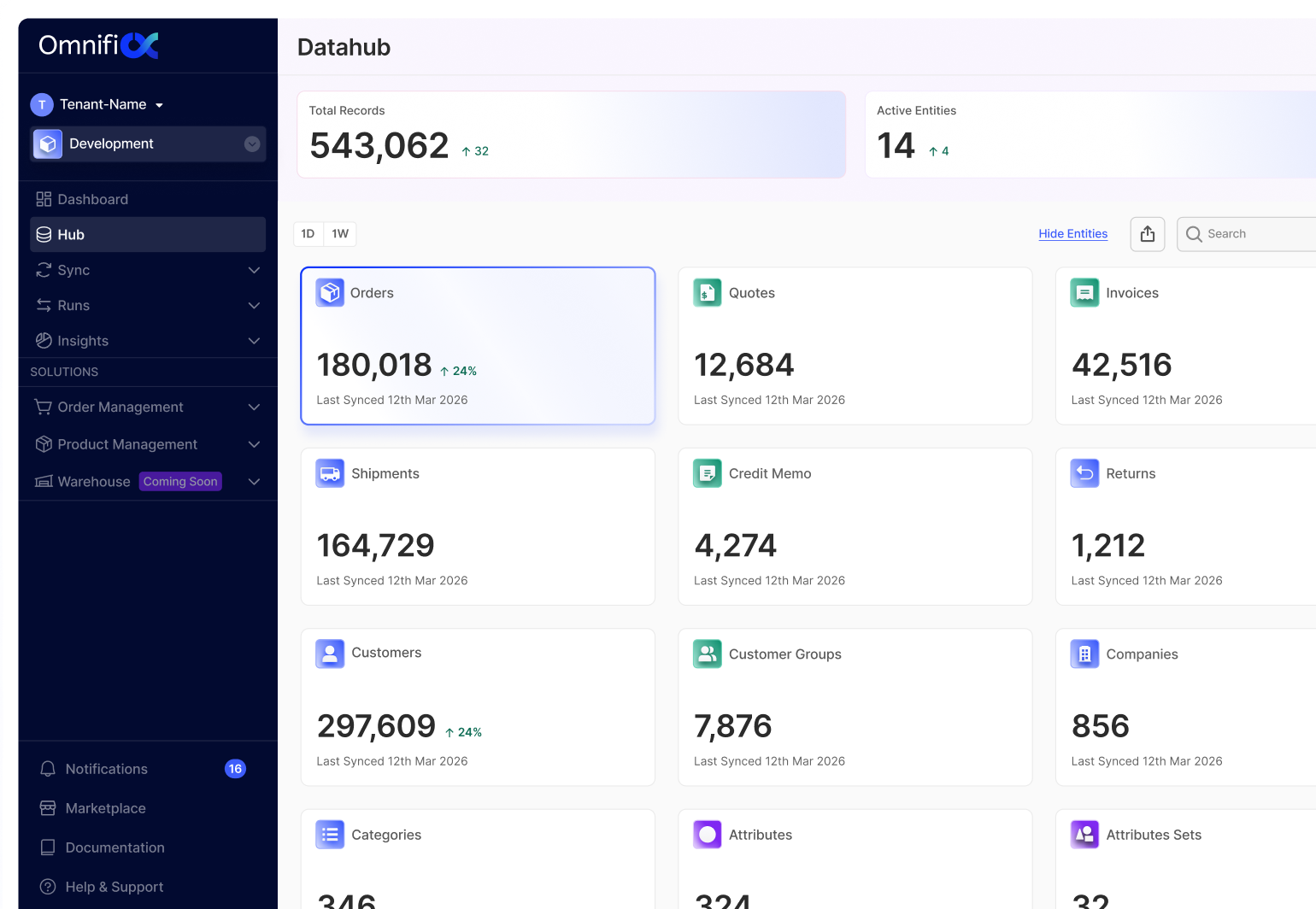
Every commerce entity you run operations on, including products, customers, orders, inventory, pricing, shipments, returns, payments, invoices, is modeled once, as a governed record, at the center of OmnifiCX.
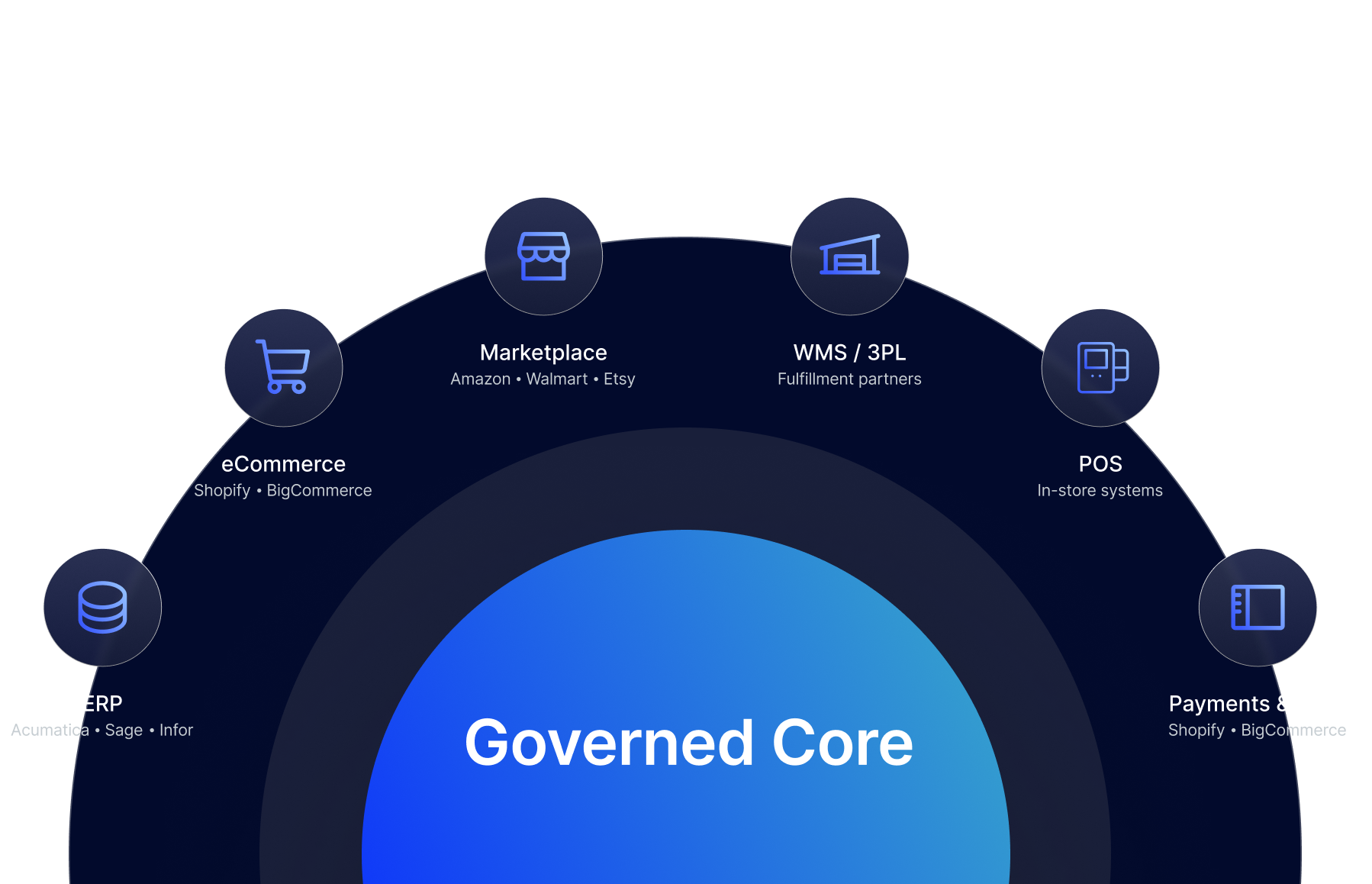
Nothing is forwarded as-is. Data is validated, standardized, and mastered into that canonical record before it flows anywhere. Every connected system, including ERP, storefront, marketplace, WMS, and 3PL, reads from and writes to the same record, not a copy of it.
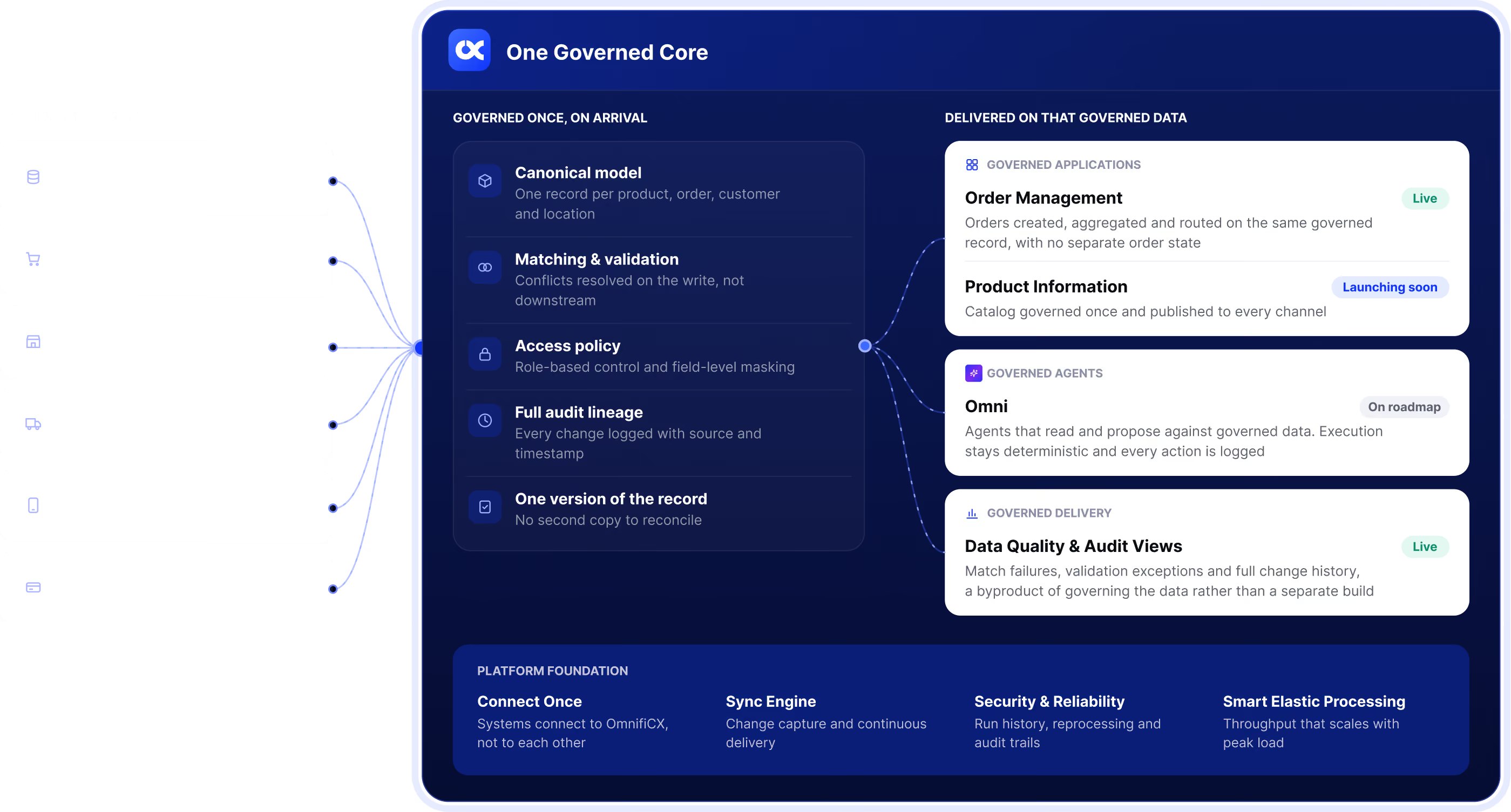
That's the structural difference between OmnifiCX and a system that just synchronizes fields between platforms: the record itself is the source of truth, not whichever system last wrote to it.
Rules, not manual review
Automated Governance
Validation and standardization aren't a review step someone runs before a report. They run on every write, automatically, as part of the platform. A record doesn't reach the master data layer until it passes.
Matching and
de-duplication rules resolve conflicting records automatically
Formats, units, and taxonomies are standardized on the way in
Business rules are enforced as part of the write, not policed after the fact
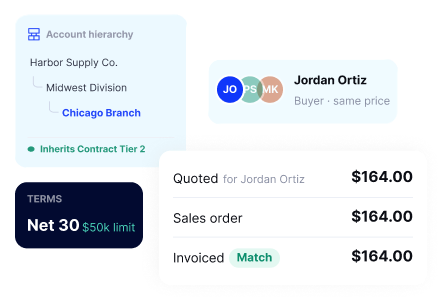
B2B Pricing Rule
Company-specific pricing, contract terms, and account hierarchies are governed once. The number your sales team quotes is the number that bills for every account and every contact.
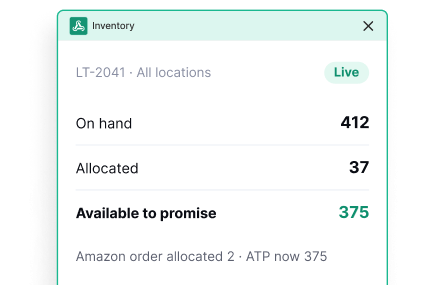
Inventory Rule
Available-to-promise is recalculated from the governed position on every change, rather than from the last batch sync, so what's sellable is always current.
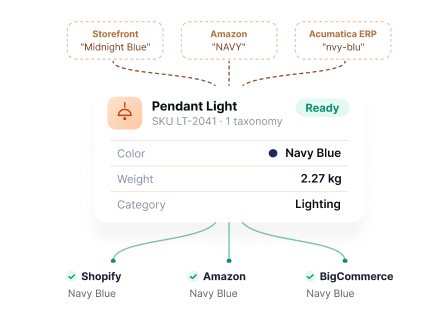
Catalog Rule
Product attributes are standardized to one taxonomy before publishing, so the same item reads identically on every channel it's listed on.
FAST, WITHOUT CUTTING CORNERS
Commerce Accelerators
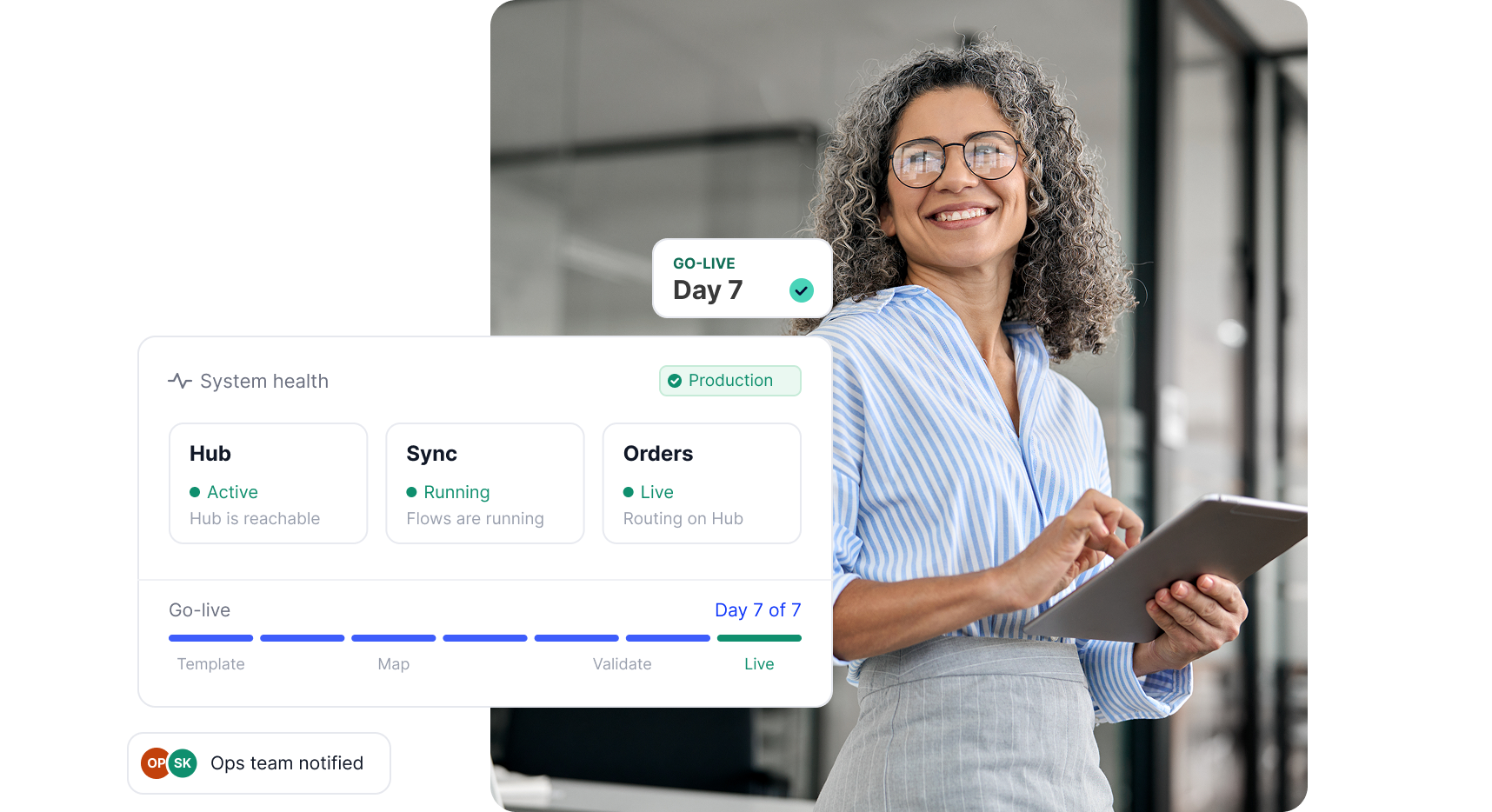
Deploying a governed foundation doesn't have to mean a long, custom implementation. OmnifiCX ships with production-grade templates for the most common commerce scenarios. These are proven patterns, not proof-of-concept code someone has to harden later.
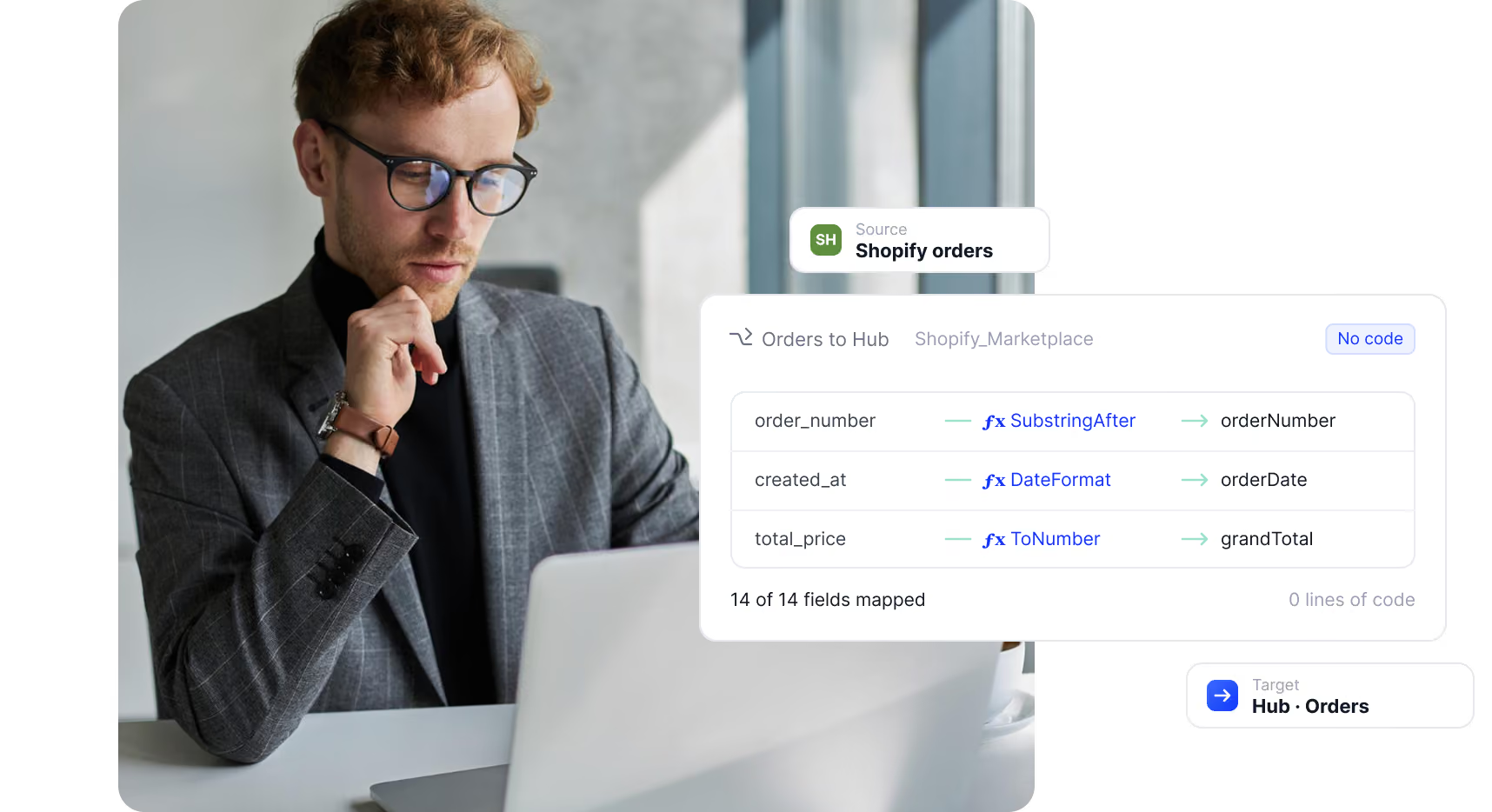
Start from a template built for your ERP, storefront or Marketplace
Map your entities to the governed data model: configuration, not code
Validate against real data before anything goes live
Go live, production-ready in as little as 7 days


Built in, not bolted on
Audit-Ready Data
Governance isn't only about accuracy. It's about being able to prove what happened, to whom, and when. Access control and audit logging are part of the foundation from day one, not a compliance project layered on before a review.
Role-Based Access Control
Every user and system sees and edits only what its role permits, enforced at the record level.
Data Masking
Sensitive fields are masked for roles and integrations that don't need to see them in full.
Encryption
Data is encrypted at rest and in transit across every connected system.
Full Audit Logging
Every change to a governed record is logged. Who changed it, when, and what it was before.

Configuration, not code
One Governed Platform for Every Commerce Operation.
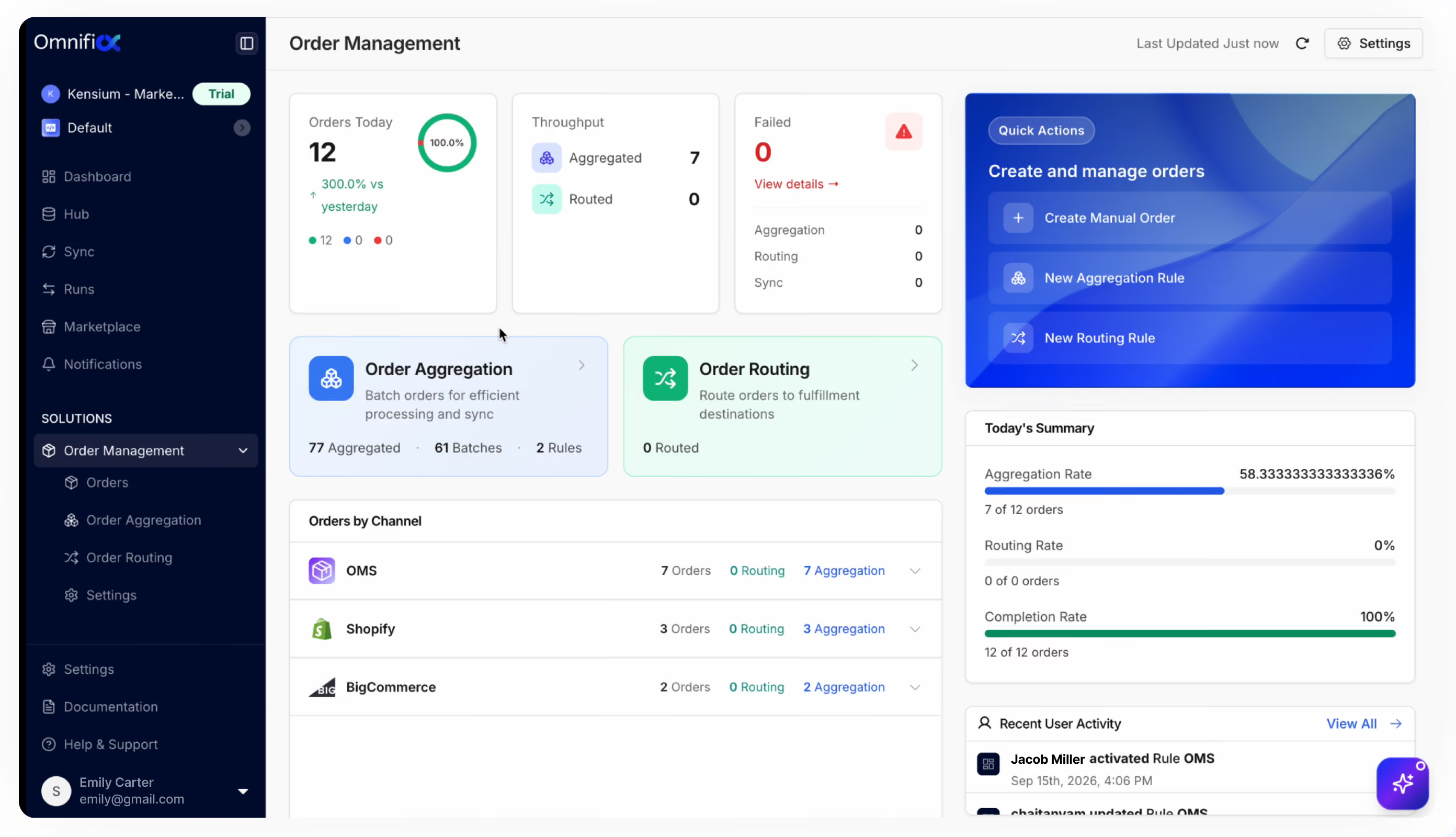
Manage every operation below without adding a new tool for each one. Integrate the systems you already run onto the governed foundation, and everything is managed from OmnifiCX: orders, catalog, inventory, pricing, and more, all on the same master data layer. Order Management runs natively on the platform today; every other operation activates as a native OmnifiCX module as you're ready to consolidate.
Running natively today
Order Management (OMS)
Order aggregation, routing, and fulfillment across every channel, both B2B and B2C, running natively on OmnifiCX's governed data layer today. Split fulfillment, multi-location routing, and returns are all managed on the same foundation, for customers running production volume right now.
Product Information (PIM)
Govern product data once and publish it consistently to every storefront, marketplace, and feed. Manage it today through your connected PIM or storefront, with a native OmnifiCX module activating next.
Inventory Management
Live inventory positions across every location, 3PL, and channel, governed and visible from the systems you already run.
Warehouse Management (WMS)
Picks, packs, and shipments that flow into the master data layer automatically.
Point of Sale (POS)
In-store transactions on the same inventory, pricing, and customer records as every other channel.
Returns Management
Governed returns processing across channels and 3PLs, visible in real time.
Loyalty
Points, tiers, and redemption rules consistent across every channel and touchpoint.
Gift Cards
Issuance and redemption governed across channels, tracked in the master data layer.
Order Management runs natively on OmnifiCX today. Product Information joins it next. Each new module activates on the same governed foundation you're already running on, not as a separate system to integrate later.
The stakes
Connect Once, Connect All
Every system connects to OmnifiCX once, not point-to-point, and not through a mesh of one-off integrations. Add a new platform later, and it inherits every existing connection automatically. Configuration, not code: your team owns it.
Several live connectors across ERP, commerce, and marketplace, and growing.
Shopify · BigCommerce · Adobe Commerce · Acumatica · Sage X3 · Sage 500 · Infor CSD · Avalara · Stripe · and more

Why Governance Matters for AI
Built for the AI Era
AI recommendations, dashboards, and future agents that act on your behalf are all only as reliable as the data underneath them. Fragmented exports and reconciled estimates make confident-sounding outputs that are still wrong.
Because OmnifiCX governs the operational data foundation today, it's built to be the trustworthy input AI needs for the analytics and personalization running on it now, and for the agentic commerce that's coming next.
Ready for agentic commerce: no bolt-ons, no re-architecture. Agents work against the governed core. Since it is already available, adopting them is a configuration step, not a platform change.
What's true today
Pre-built commerce dashboards and personalization inputs run on governed data, not fragmented exports. The numbers in the report are the numbers everyone already agrees on.
What governance sets up for tomorrow
A canonical, continuously accurate record for every entity is exactly the foundation agentic commerce will need before any agent, internal or external, can safely act on it.
How it compares
Where other platforms stop, OmnifiCX keeps going
Every adjacent category solves part of the problem. None of them govern the data underneath it.
What it does
Where it stops
Middleware / iPaaS
Connects systems and moves data between them
Moves data without governing it: no canonical record, no validation, just delivery. Every system still ends up with its own version of the truth.
PIM-only Tools
Governs product data and publishes it to channels
Governs one entity. Pricing, customers, inventory, and orders still live in fragmented systems that need their own reconciliation.
OMS / inventory point tools
Routes orders and manages stock levels
Routes on data it doesn't govern. Decisions are only as good as whatever sync it last received.
Custom / VAR Builds
Point-to-point code tailored to your systems
Works until something changes, such as a platform upgrade, a new marketplace, or a developer departure. Every change becomes a new project.

Governs the master data layer, runs commerce operations on top of it, and is Agentic Commerce ready.
Built to keep extending, with Order Management live today, Product Information next, then Point of Sale and Warehouse Management, all on the same foundation.